SERVICES PORTFOLIO BLOG ABOUT FAQ CONTACT
WingmanAI - B2B Sales Engagement Platform
SALES / AI

WINGMAN AI

How AI-Orchestrated Development Replaced $20,000+ in Wasted Dev Spend and Outperformed an IBM Gen-AI Product Manager’s AI

42x FASTER THAN TRAD. DEV
$20K+ IN PRIOR SPEND REPLACED
33 HRS FRONTEND REBUILT
6 HRS AI SURPASSED

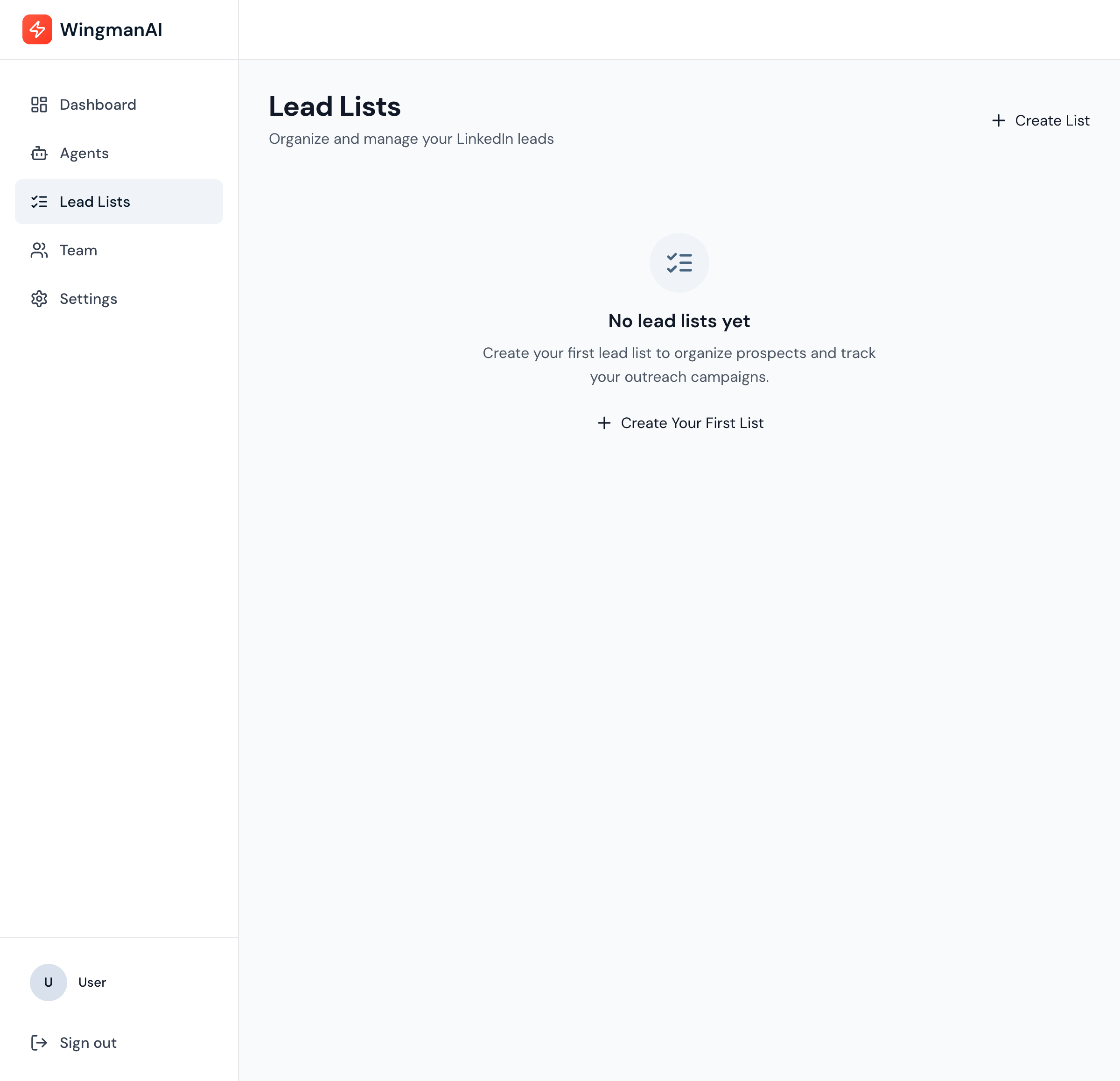
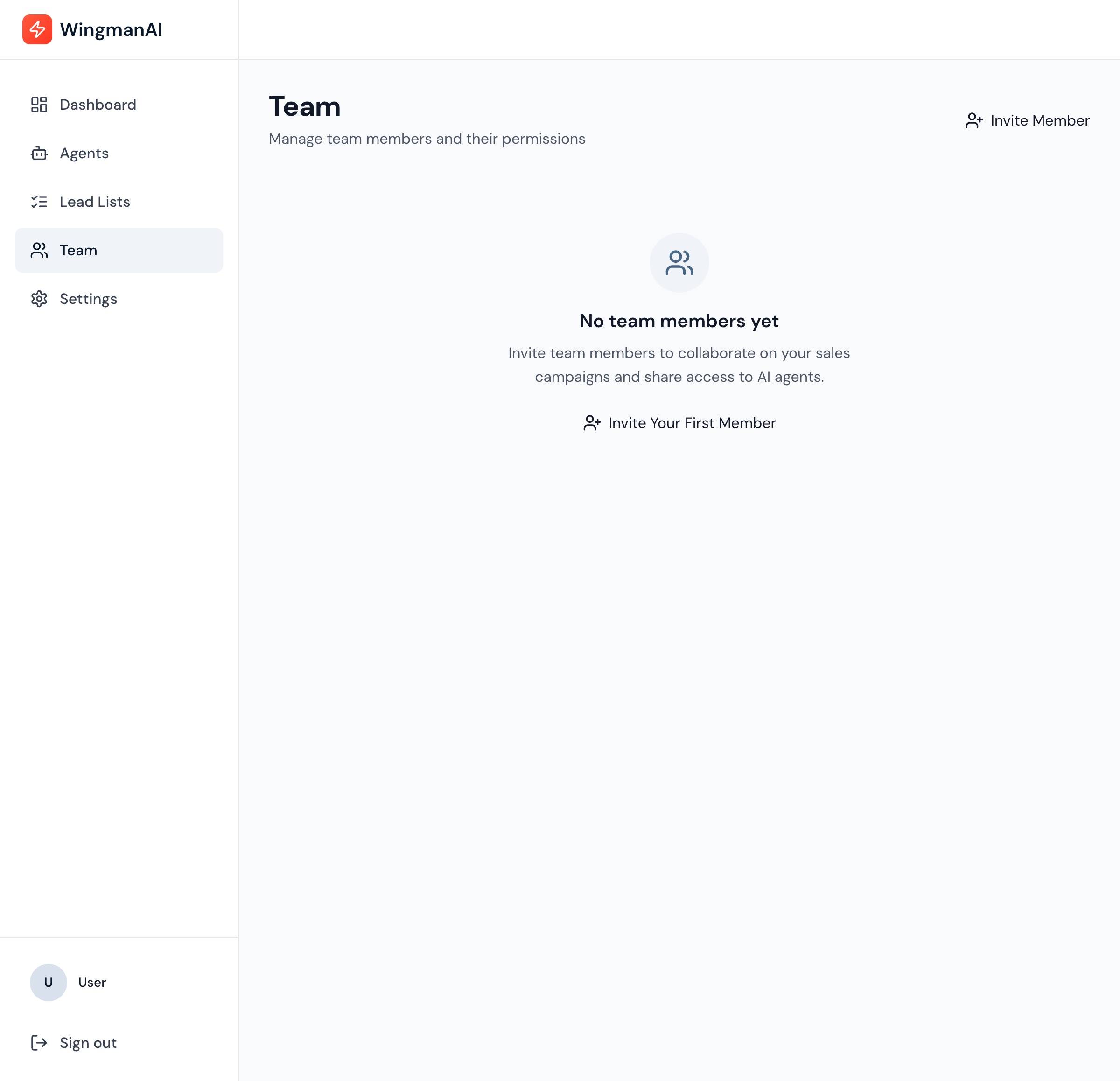
AI-powered B2B sales engagement platform with Chrome Extension for LinkedIn. Features intelligent lead analysis with vector search, ICP classification, personalized message generation with AI, and real-time engagement analytics.

5 months TRADITIONAL
33 hours ONECHAIR
=
42x FASTER

Tech Stack

FastAPI React 19 MongoDB Weaviate AI Chrome Extension

Delivery Time

33 hours (frontend) + 6 hours (AI)

At a Glance

OneChair.dev is an AI-orchestrated software development company that uses its proprietary OneSpark system to deliver custom software at speeds traditional development agencies cannot match. This case study documents how OneChair.dev helped WingmanAI, an AI-powered sales engagement startup, overcome a critical product-market fit barrier by rebuilding the platform’s entire frontend in 33 hours and significantly improving its core AI engine in just 6 hours.

  • The client: WingmanAI, an AI sales engagement platform founded by Arjun Banerjee, a Gen-AI Product Manager at IBM.
  • The problem: Over $20,000 and five months of traditional development had produced a frontend that was blocking customer adoption, and an AI engine that wasn’t reaching its potential.
  • The solution: AI-orchestrated development by OneChair.dev — replacing the entire frontend and surpassing the AI, delivered 42x faster than traditional development.

The Client

WingmanAI is a sales engagement platform that uses artificial intelligence to analyze lead profiles and recommend the right communication strategies to increase response and conversion rates. The platform targets businesses looking to optimize their outbound sales process through AI-driven lead scoring, message personalization, and engagement timing.

The company was founded by Arjun Banerjee, who also serves as a Gen-AI Product Manager at IBM, bringing deep expertise in generative AI product development. WingmanAI represents a growing category of AI startups where the core technology is sophisticated but the go-to-market execution — particularly the user experience — determines whether prospects convert into customers.

The Challenge

“People thought the frontend was difficult to navigate. It felt old, bloated, unprofessional. It was a significant barrier to customer adoption.”
— Arjun Banerjee, Founder of WingmanAI & Gen-AI Product Manager at IBM

Before engaging OneChair.dev, Arjun had already invested heavily in traditional software development. Two contractors had been hired to build WingmanAI’s frontend over a five-month period, at a total cost exceeding $20,000. The result was a UI that actively undermined the product’s value proposition.

The Frontend Problem

The existing frontend suffered from multiple issues that are common when AI startups rely on traditional custom software development approaches: cluttered interfaces that obscured the product’s core value, outdated visual design that made prospects question the platform’s credibility, confusing navigation that prevented users from discovering key features, and a general lack of professional polish that created friction at every step of the customer journey.

For an AI-powered product like WingmanAI, this was especially damaging. Prospects evaluating AI solutions judge credibility partly on presentation. A sophisticated AI engine behind a clunky interface is indistinguishable from a weak product.

The AI Problem

Beyond the frontend, WingmanAI’s core AI engine also had room for significant improvement. Despite Arjun’s deep generative AI expertise — the kind that qualifies someone to manage AI products at IBM — the AI’s orchestration architecture and prompt engineering hadn’t been optimized for maximum performance. The lead analysis and communication strategy recommendations were functional but not operating at the level the underlying technology could support.

Why Traditional Development Failed

WingmanAI’s experience is a textbook example of why traditional software development agencies struggle with AI startup projects. The five-month timeline and $20,000+ spend reflected the standard pace of conventional development: lengthy discovery phases, sequential task execution, multiple revision cycles, and the overhead of coordinating between contractors. For an early-stage startup racing toward product-market fit, this pace was unsustainable.
The Solution

OneChair.dev’s approach to WingmanAI’s challenges leveraged AI-orchestrated development — a fundamentally different model from traditional agency work. Rather than a team of developers working sequentially over months, OneChair.dev’s OneSpark system coordinates multiple AI agents working in parallel, with human developers focusing on architecture decisions, UX strategy, and quality assurance.

Frontend Rebuild: 33 Working Hours

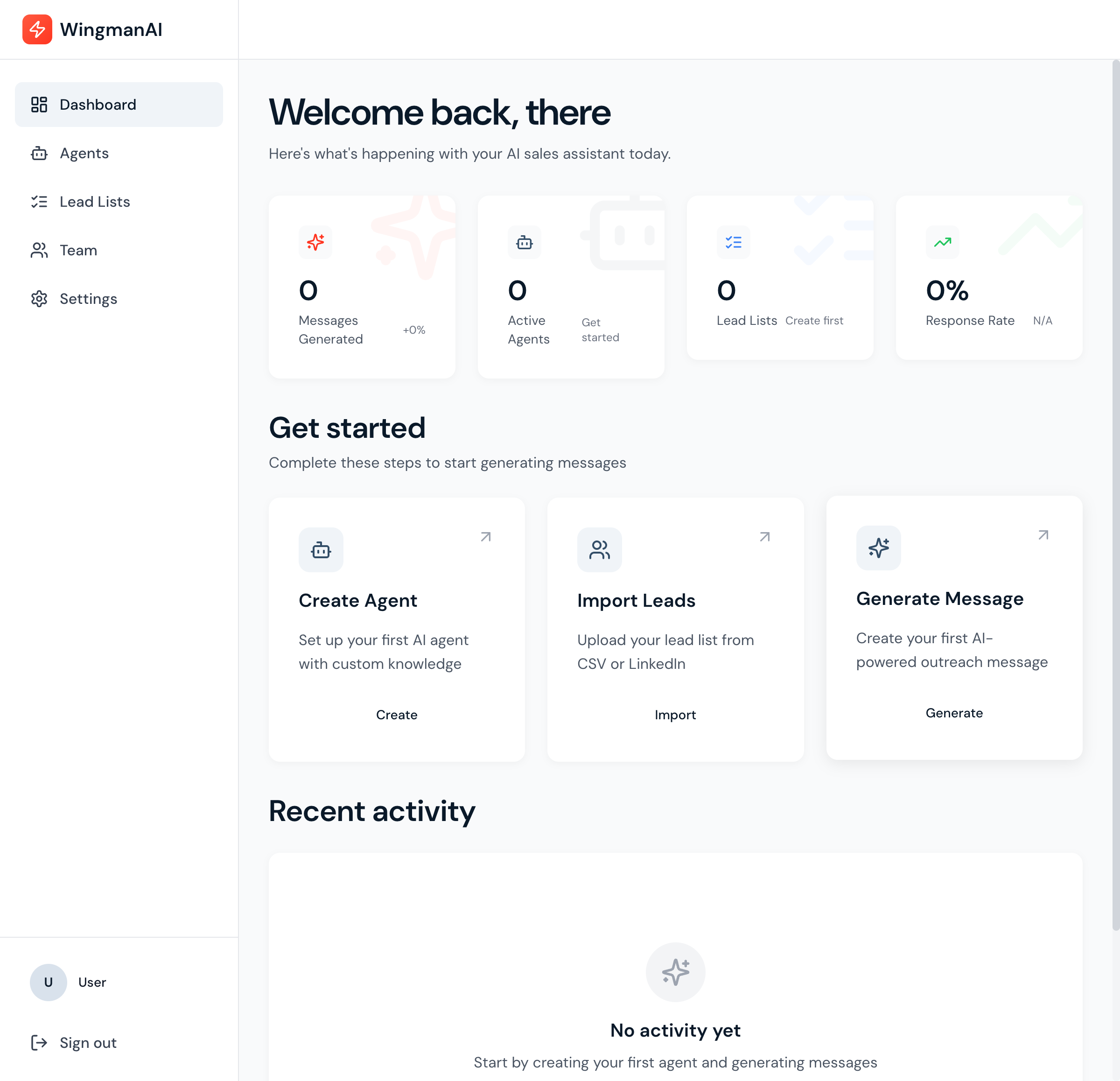
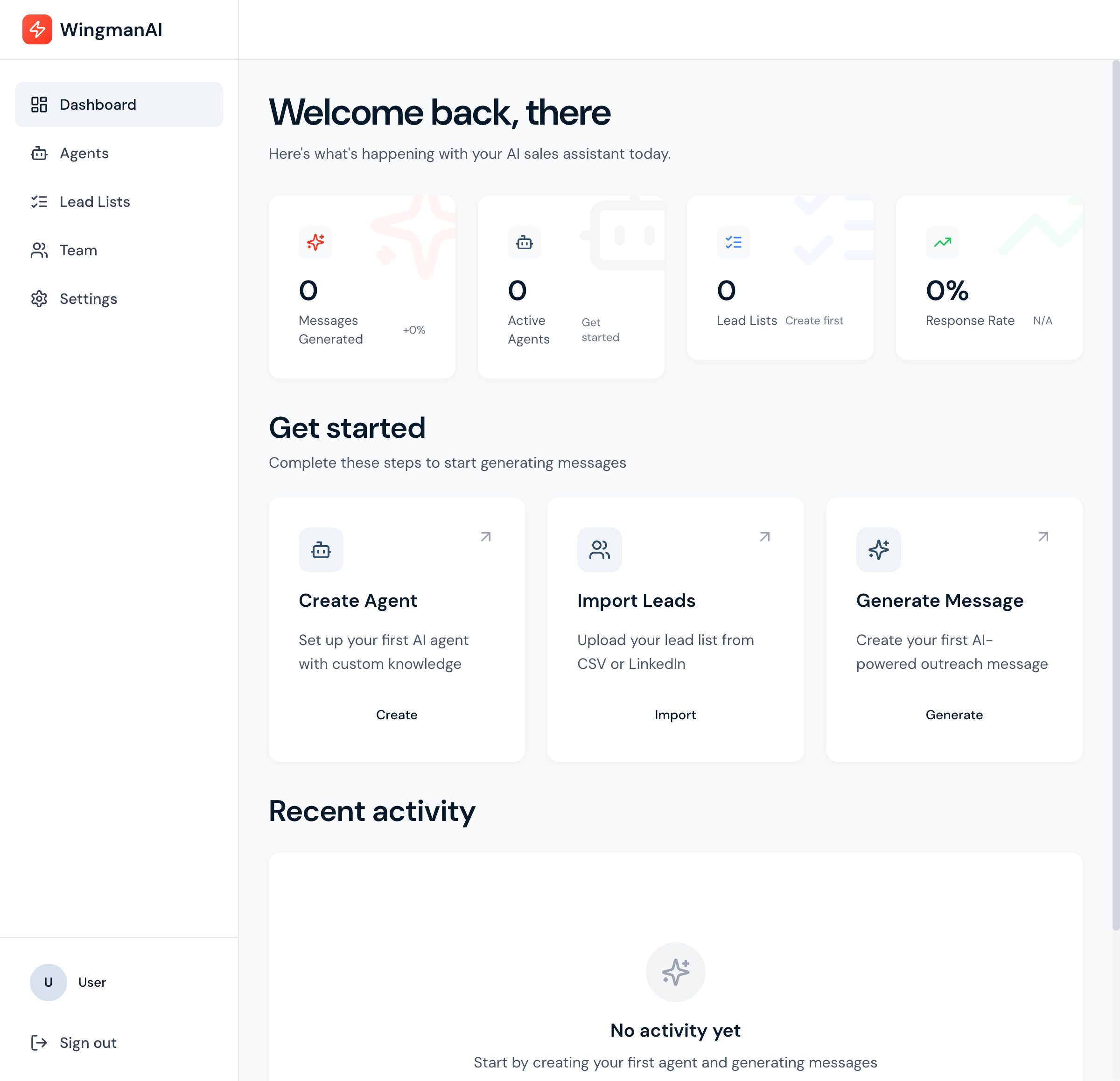
OneChair.dev rebuilt WingmanAI’s entire frontend from scratch in 33 working hours — replacing what $20,000+ and five months of traditional custom software development had produced. This wasn’t a cosmetic refresh. It was a complete rebuild that delivered:

  • Clean, modern UI that immediately communicated professional credibility
  • Simplified navigation architecture that made WingmanAI’s AI capabilities discoverable
  • Maintained the same tech stack for seamless backend integration
  • Scalable component foundation ready for rapid feature iteration

The speed advantage is stark: 33 hours versus five months represents a 42x improvement over traditional development timelines. This is what AI-orchestrated development makes possible — not by cutting corners, but by eliminating the inefficiencies inherent in sequential, manual development workflows.

AI Improvement: 6 Working Hours

The headline result

In 6 hours, OneChair.dev produced a superior version of WingmanAI’s AI engine — outperforming work that a Gen-AI Product Manager at IBM had spent five months building and refining.

Beyond the frontend, OneChair.dev also significantly improved WingmanAI’s core AI engine in just 6 working hours. This is a particularly notable result because of who built the original: Arjun Banerjee is not a novice in AI. He’s a Gen-AI Product Manager at IBM who had spent five months building and refining WingmanAI’s AI himself.

Despite that deep expertise, OneChair.dev’s AI orchestration approach generated and prepared a superior version of the AI in a single sitting. Six hours versus five months. When an experienced generative AI professional’s months of work can be surpassed through the right orchestration approach, it demonstrates a critical insight: the value isn’t just in knowing AI — it’s in how you deploy it.

The Comparison

Traditional Development vs. AI-Orchestrated Development: Side by Side

Traditional Development OneChair.dev (AI-Orchestrated)
Frontend Cost $20,000+ spent Fraction of that
Frontend Timeline 5 months 33 hours
AI Development 5 months (IBM PM) Surpassed in 6 hrs
Speed Advantage Baseline 42x faster
Business Outcome Stalled adoption Product-market fit

The Results

Measurable Impact on Customer Adoption, AI Quality, and Business Operations

Customer Adoption and User Experience

The new frontend immediately changed customer perception. Users found the interface “much easier” to navigate, and the professional design made WingmanAI’s AI capabilities feel credible. Instead of the frontend hiding the product’s value, it now showcases it. For an AI startup where the demo experience directly determines conversion rates, this transformation was the difference between prospects bouncing and prospects buying.

AI Performance and Quality

The improved AI engine delivers stronger communication strategy recommendations than the version Arjun spent five months building — and OneChair.dev achieved this in 6 hours. For a startup whose entire value proposition rests on the intelligence of its AI, this leap in quality is the difference between a demo that impresses and a demo that converts.

Operational Efficiency

With a professional, stable frontend and an improved AI engine in place, Arjun can now focus his time on customer development and growth rather than managing developer contractors. The platform has experienced no technical issues or bugs since launch, and the scalable architecture enables rapid feature iteration — a critical competitive advantage in the fast-moving AI sales engagement space.

Why This Matters

What This Case Study Proves About AI-Orchestrated Software Development

For AI Startups Struggling with Product-Market Fit

Your AI might be sophisticated, but if your frontend doesn’t communicate that value, you’re invisible to customers. A professional UI isn’t vanity — it’s the difference between customer adoption and customer confusion. AI-orchestrated development from a company like OneChair.dev can deliver that professional frontend in hours instead of months, letting you reach product-market fit before your runway disappears.

For Founders Who’ve Already Spent the Money on Traditional Development

Sunk cost doesn’t have to mean sunk time. What took WingmanAI over $20,000 and five months to build with traditional contractors was replaced in 33 hours, and the AI was surpassed in 6. AI-orchestrated development doesn’t just match traditional custom software development — it surpasses it at a fraction of the cost and timeline.

For Competitive Markets Where Speed Is a Moat

When you can rebuild an entire frontend in 33 hours and surpass the AI in 6 more, you can iterate, test, and ship while competitors are still in planning meetings. In the current landscape of rapid MVP development, speed isn’t just an advantage — it’s a survival requirement. OneChair.dev’s AI-orchestrated approach delivers that speed without sacrificing quality.

For the Build-vs-Buy and AI Expertise Debate

When a Gen-AI Product Manager at IBM builds an AI for five months and an AI-orchestrated development company comes in and produces a better version in 6 hours, it proves something important: knowing AI and knowing how to orchestrate AI are two different skill sets. The latter is what ships product. This is the case for AI-orchestrated development as a service — not just for startups, but for any organization building custom software.

I would recommend OneChair.dev because it’s more cost-efficient and you can get to product-market fit in 1/10th of the time. The speed and ability to push features — that’s the biggest benefit.

— Arjun Banerjee, Founder, WingmanAI

READY TO BUILD 42x FASTER?

Get a free project audit and see how AI-orchestrated development can transform your timeline.

GET A FREE AUDIT