SERVICES PORTFOLIO BLOG ABOUT FAQ CONTACT
Cody Yellowstone - AI Trip Planner for Yellowstone National Park
TRAVEL

CODY YELLOWSTONE

AI-powered trip planning platform for Yellowstone National Park built in 12 hours

12 HRS BUILD TIME
10 SCREENS DELIVERED
6 INTEGRATIONS

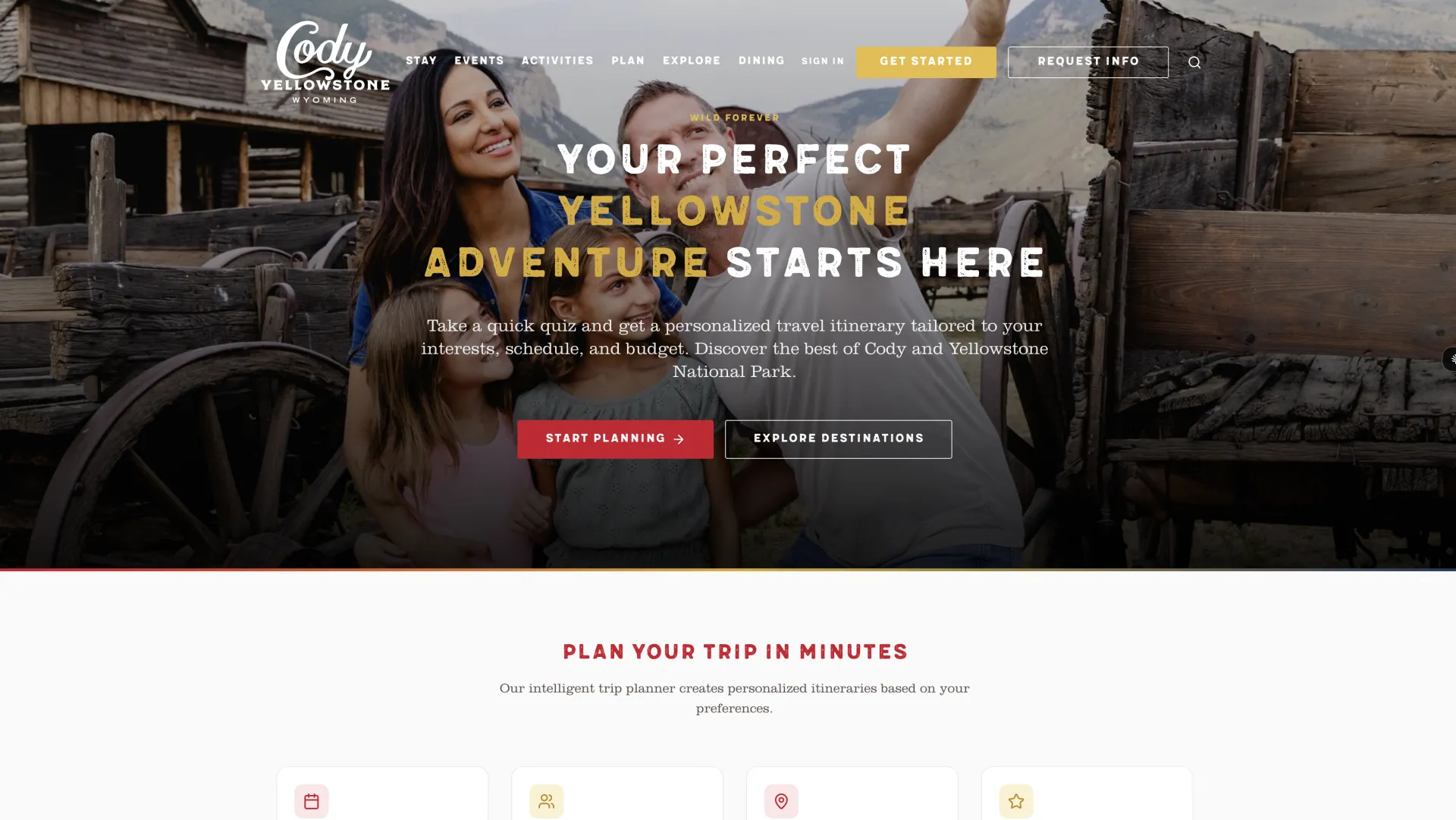
AI-powered trip planner for Yellowstone National Park. Features intelligent itinerary generation, interactive maps, real-time weather integration, and personalized recommendations.

Tech Stack

Next.js 15 NestJS PostgreSQL Mapbox OpenAI Turborepo

Delivery Time

12 hours

The Challenge

Katrina Southern and the Cody Yellowstone tourism organization needed to modernize how visitors plan trips to Yellowstone National Park. Traditional trip planning meant juggling multiple websites, outdated PDF guides, and generic recommendations that did nothing to account for individual preferences, travel dates, or physical ability.

The organization had a clear vision but a hard deadline: the platform needed to launch before peak tourism season. That left no room for a drawn-out development cycle. The requirements were ambitious:

  • Intelligent itinerary generation based on travel dates, budget, interests, and activity level
  • Interactive maps showing points of interest, routes, and recommended stops
  • Real-time weather integration to help travelers pack and plan appropriately
  • Personalized lodging and activity recommendations — not a static list, but contextual suggestions
  • A quiz-driven onboarding flow that felt conversational, not like a form

The core challenge was building something that felt genuinely personal. Generic trip planner tools already existed. What Cody Yellowstone needed was a platform where a first-time visitor with mobility considerations and a tight budget would get a fundamentally different itinerary than an experienced hiker with a week to spend. And it needed to be live in days, not months.
The Solution

OneChair built the complete platform in 12 hours using AI-orchestrated development. Rather than building a generic recommendation engine, the architecture was designed around a multi-step preference quiz that captures everything needed to generate a genuinely useful itinerary.

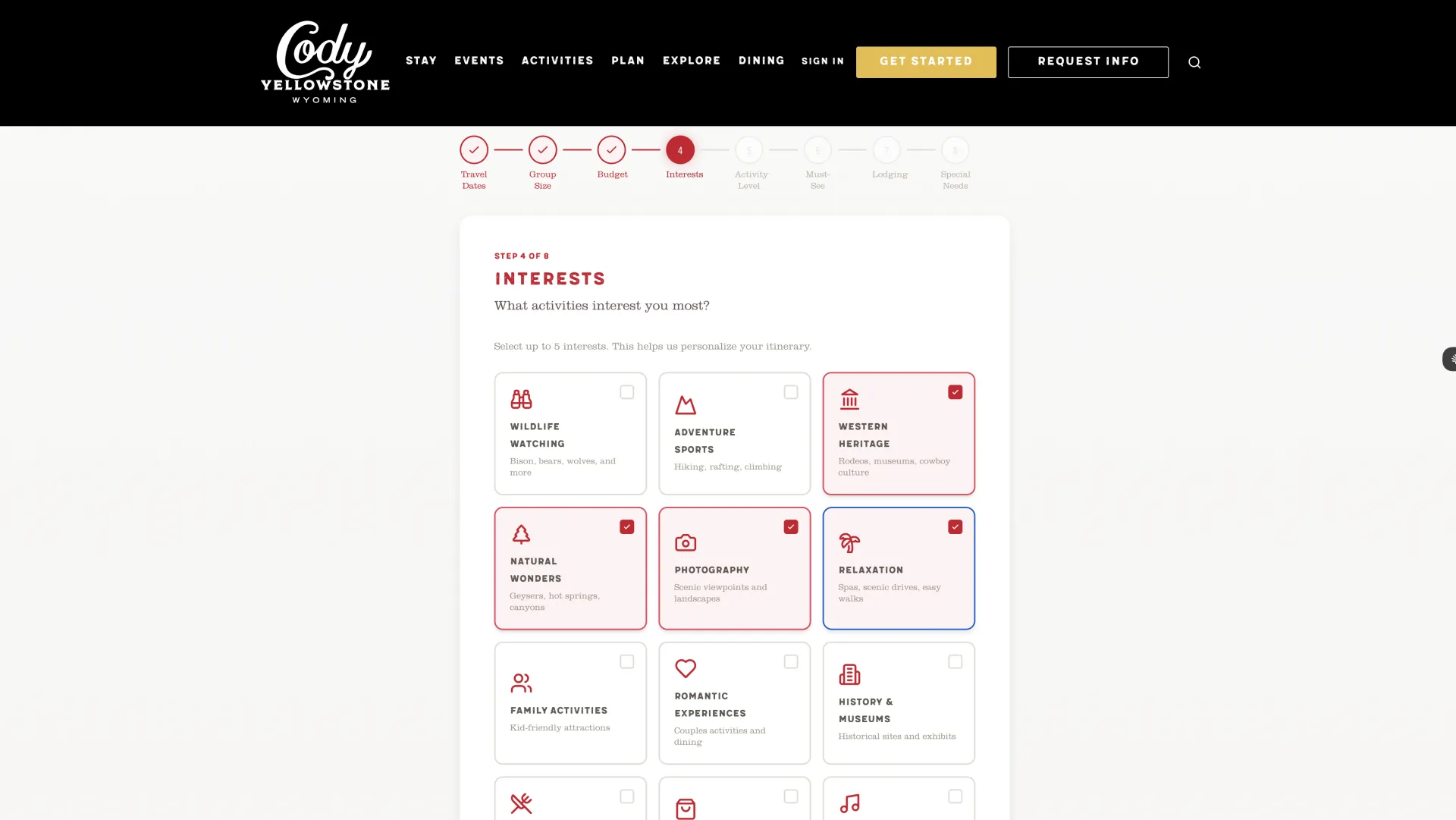
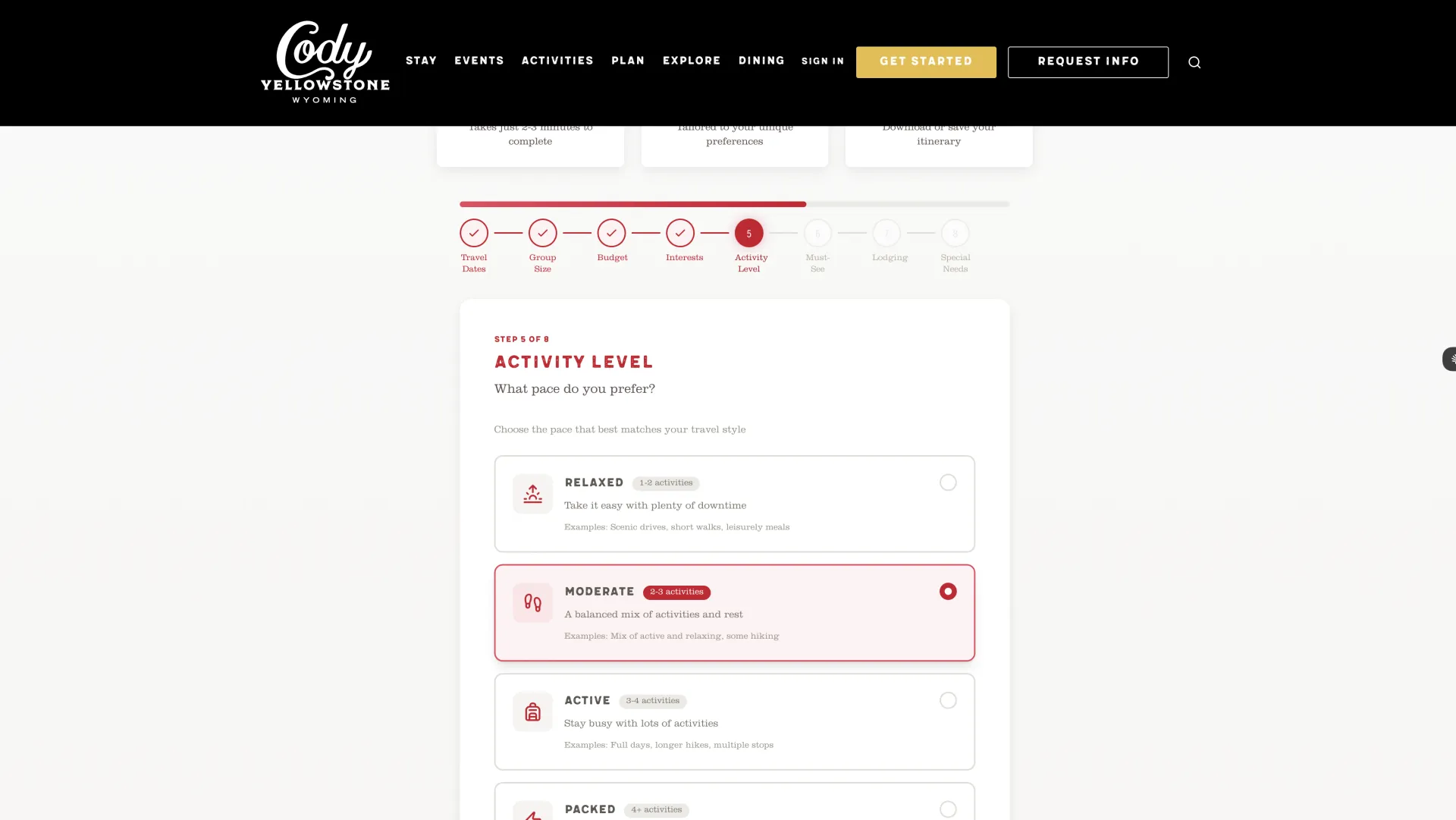
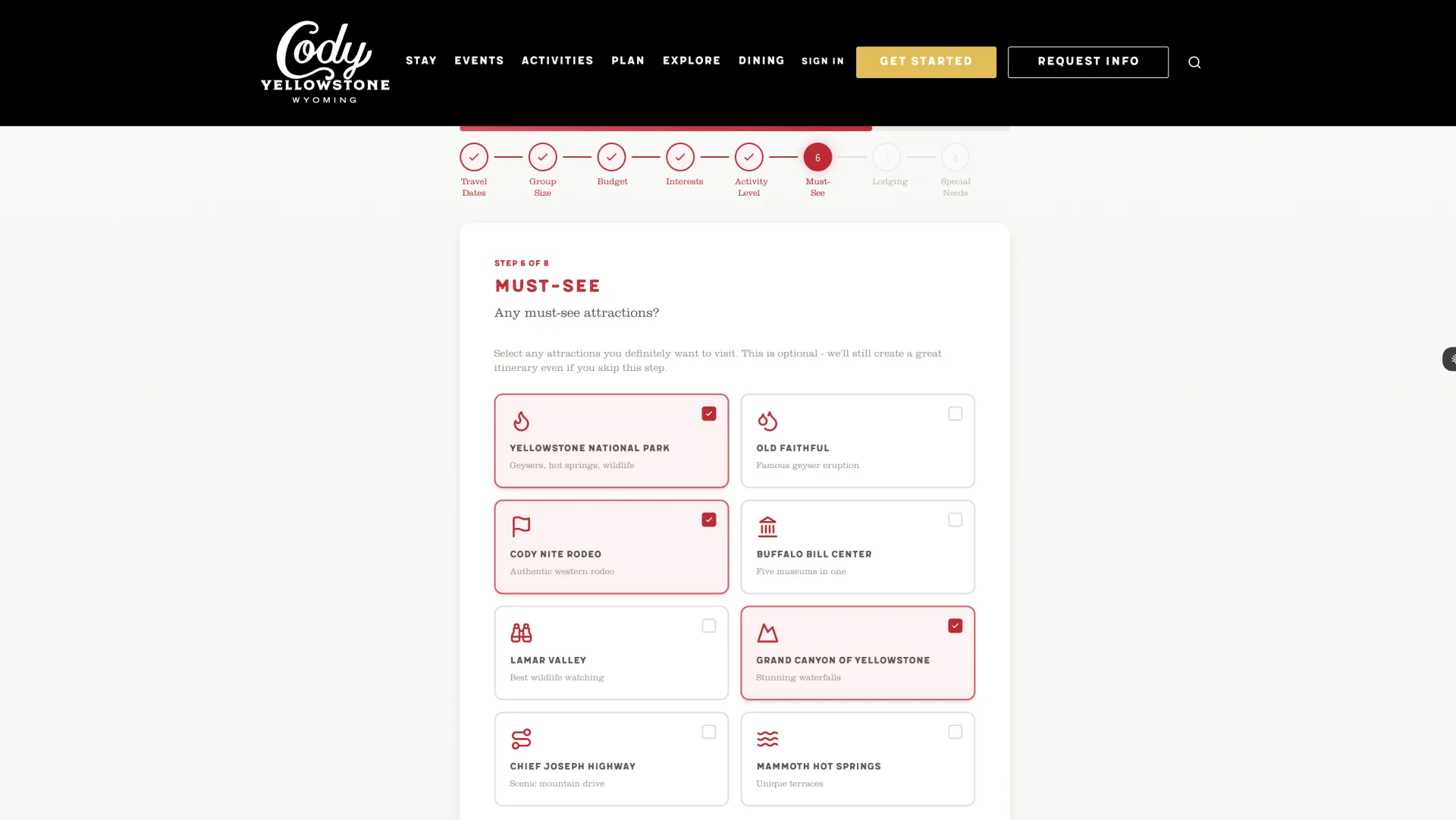
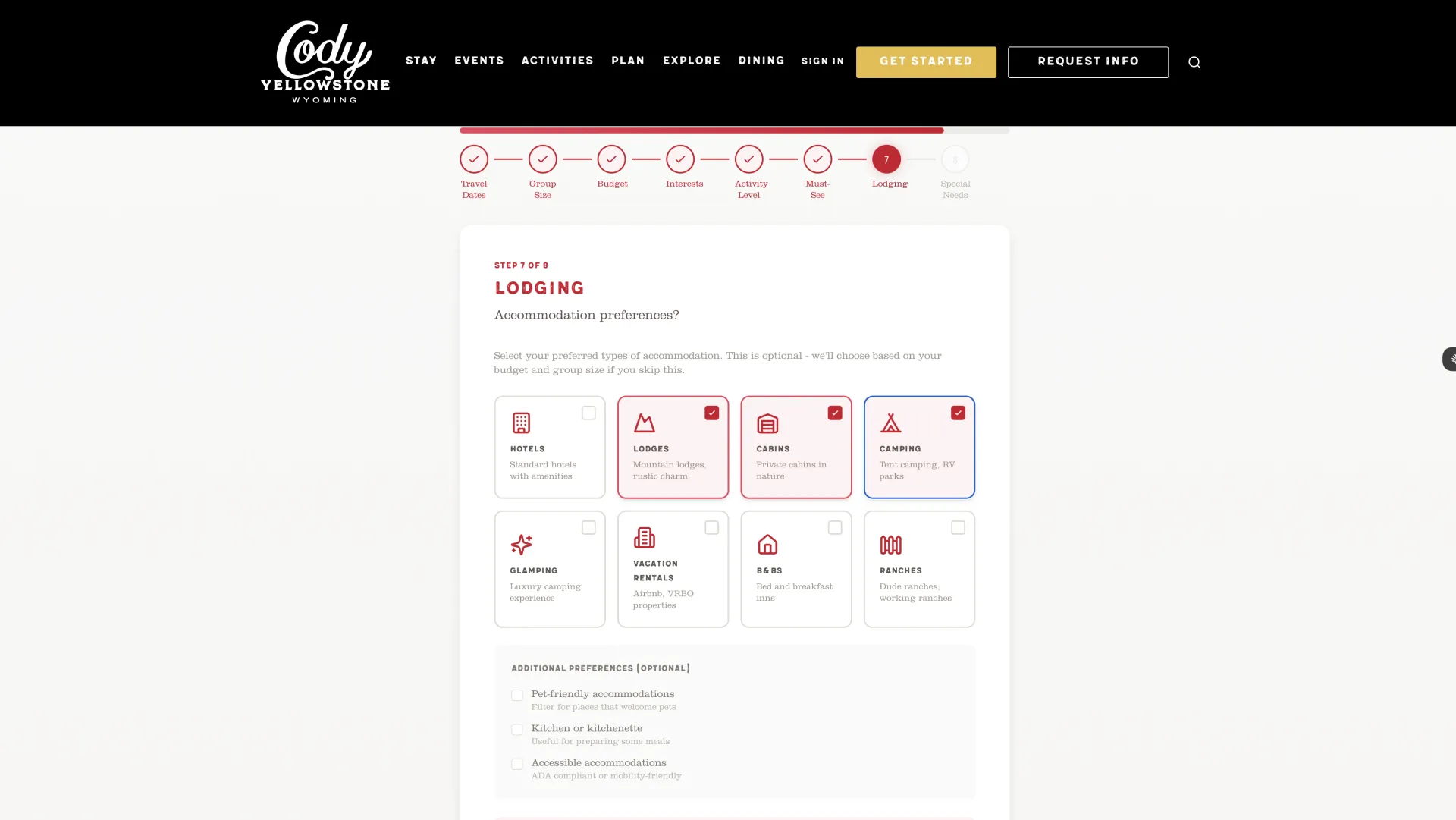
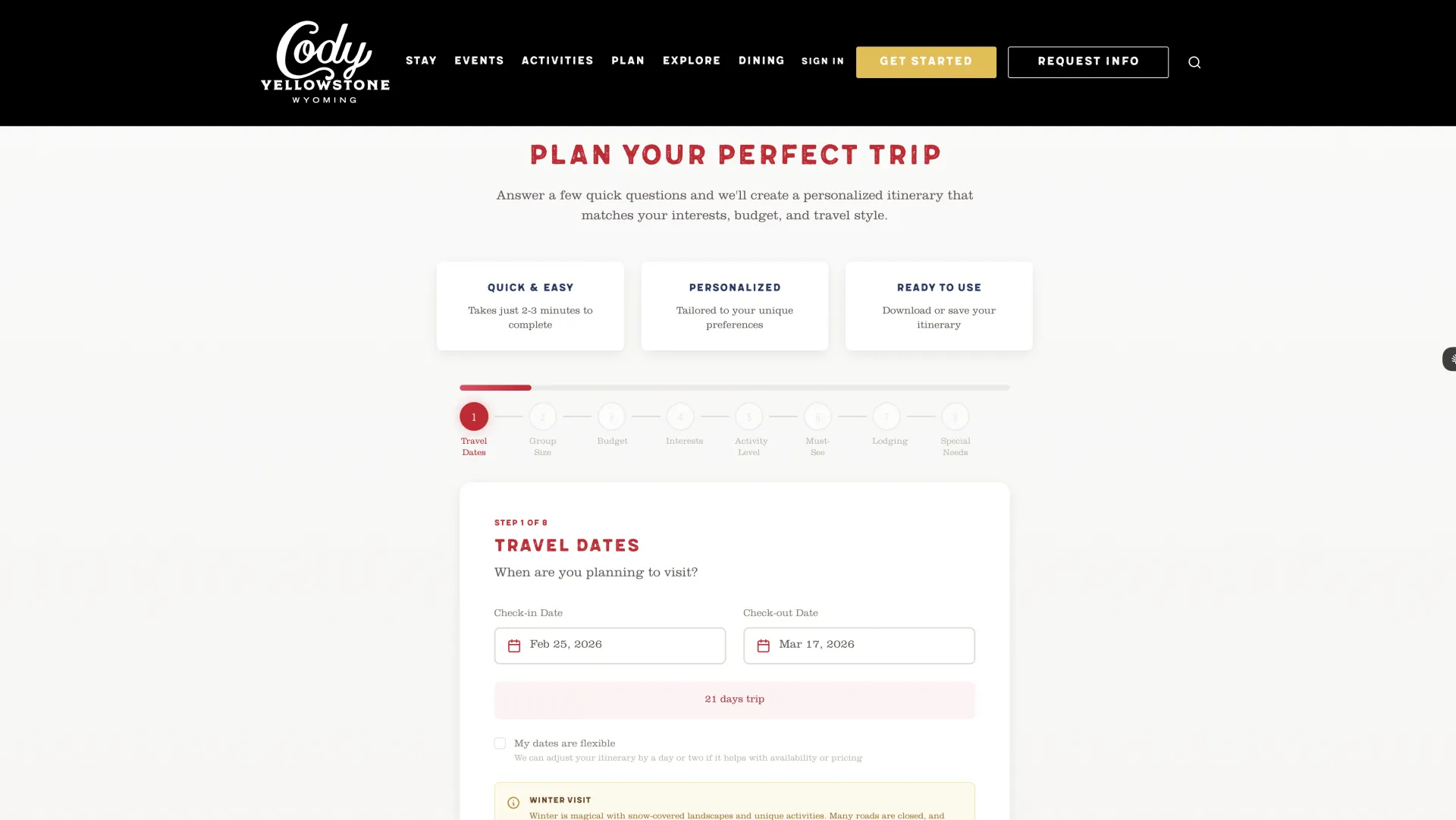
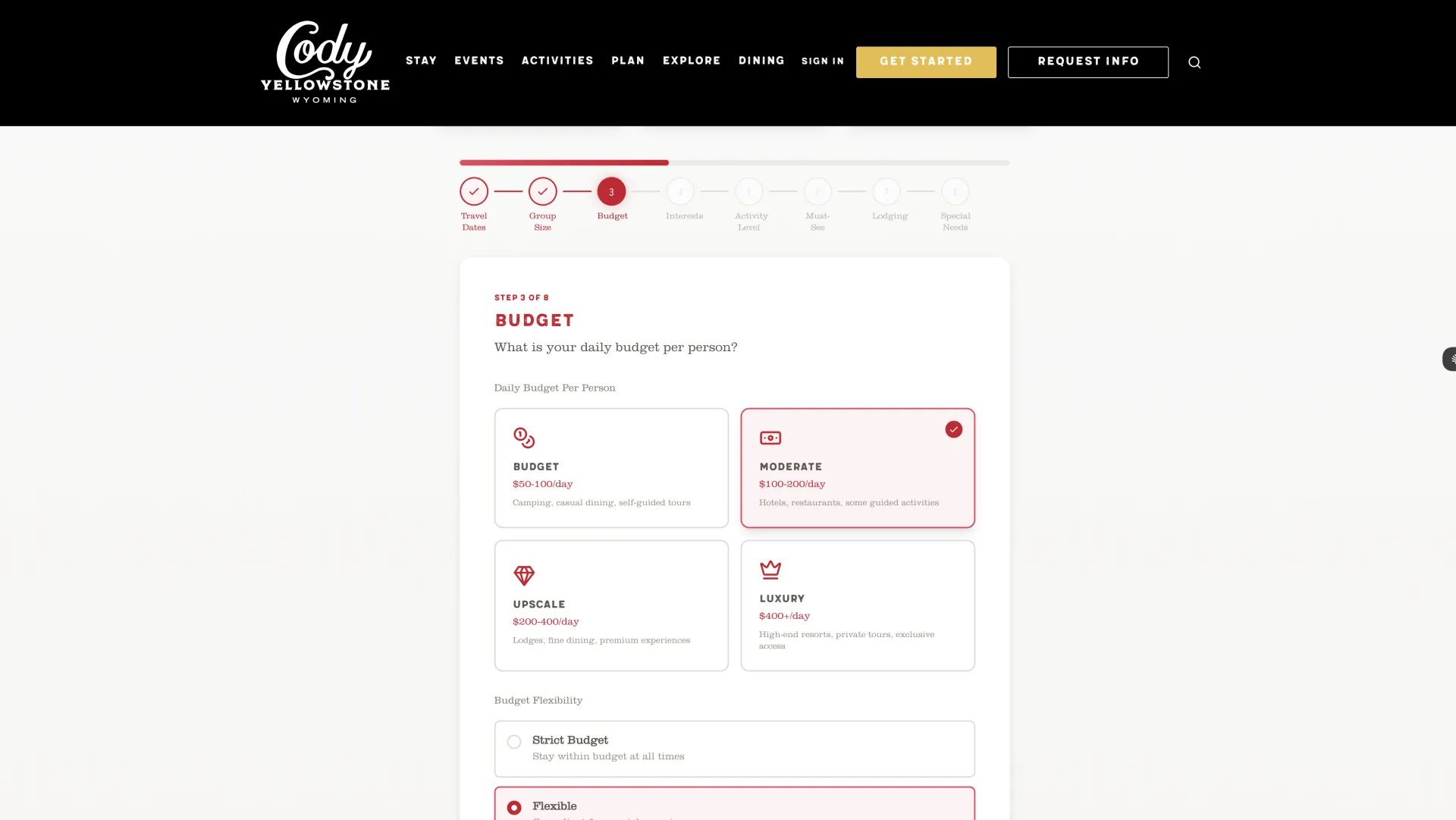
The quiz flow covers seven steps: travel dates, budget range, primary interests (wildlife, geysers, hiking, photography, history), activity level, must-see locations, group composition, and lodging preferences. Each response shapes the prompt sent to OpenAI, which generates a personalized day-by-day itinerary with morning, afternoon, and evening segments — not just a list of attractions, but a structured plan with timing, travel notes, and contextual recommendations.

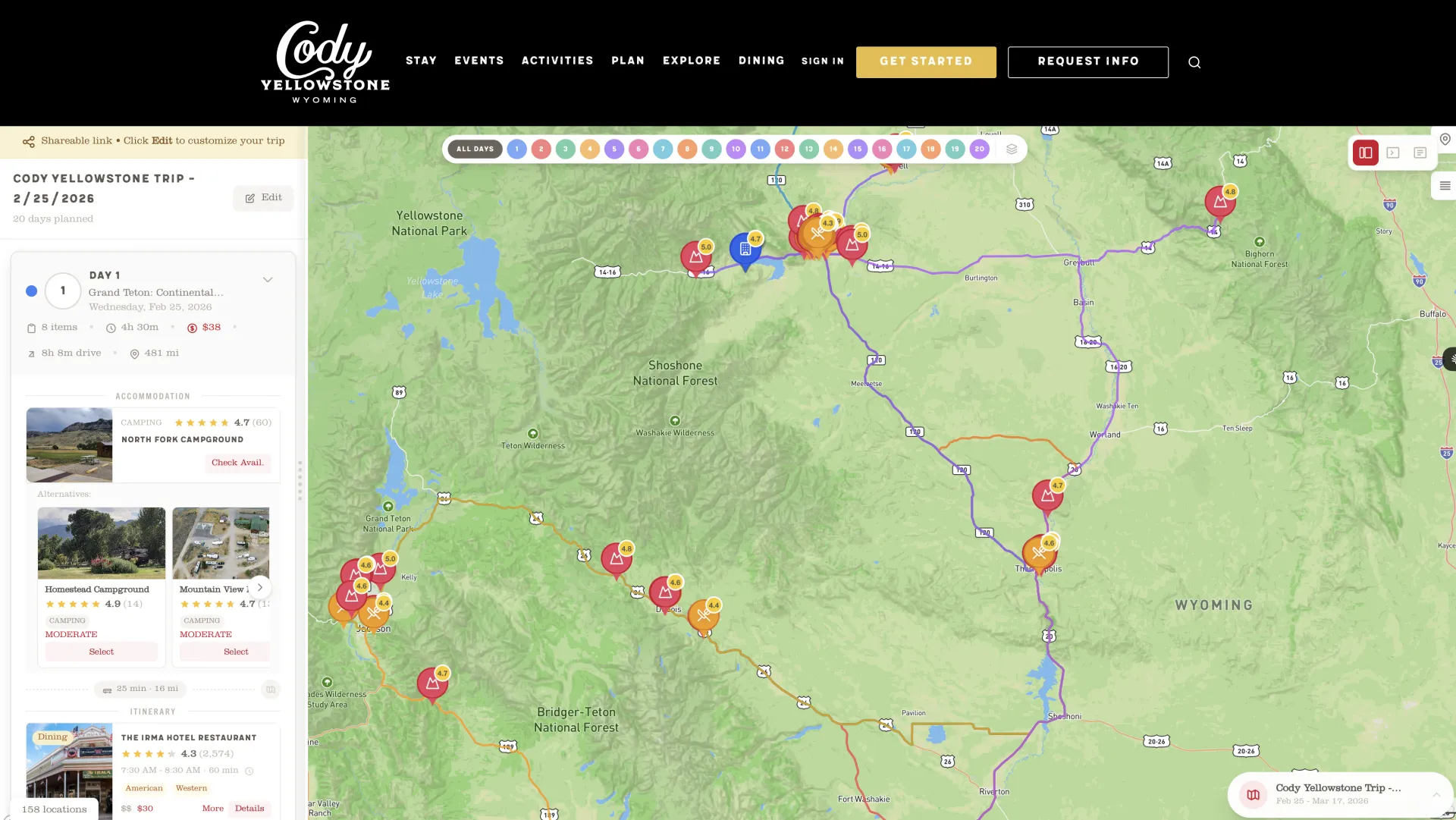
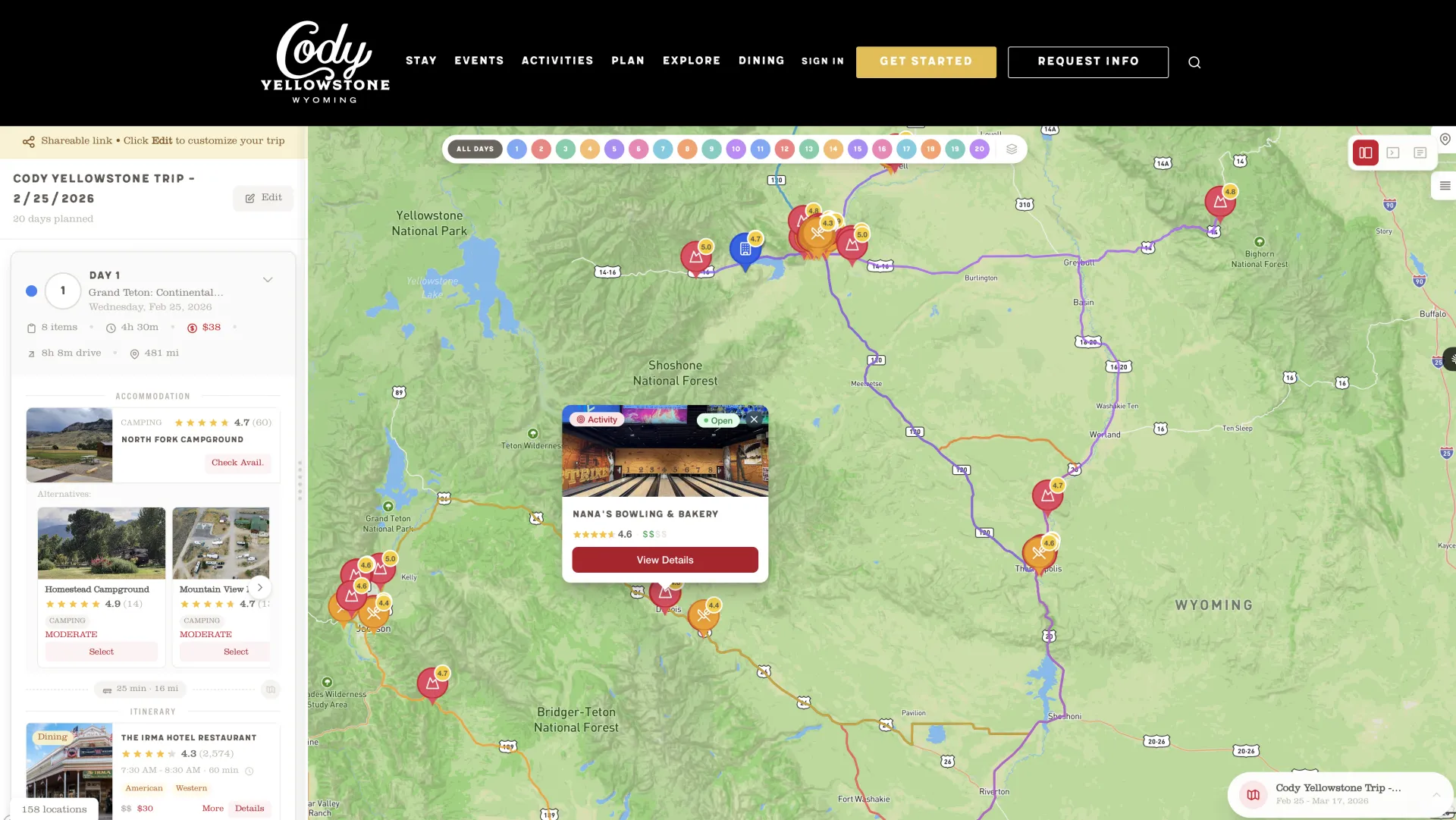
Mapbox integration powers the interactive map layer. Every location in the generated itinerary is pinned on a live map with route visualization, distance estimates, and drill-down detail pages for individual points of interest. Travelers can see their full trip at a glance before they leave home.

Real-time weather data is pulled for the travel dates and location, surfaced in the itinerary view so travelers can see what conditions to expect for each day of their trip. The tech stack was chosen for performance and maintainability: Next.js 15 frontend, NestJS backend, PostgreSQL database, and a Turborepo monorepo structure that keeps shared types and utilities synchronized between the frontend and backend without duplication.

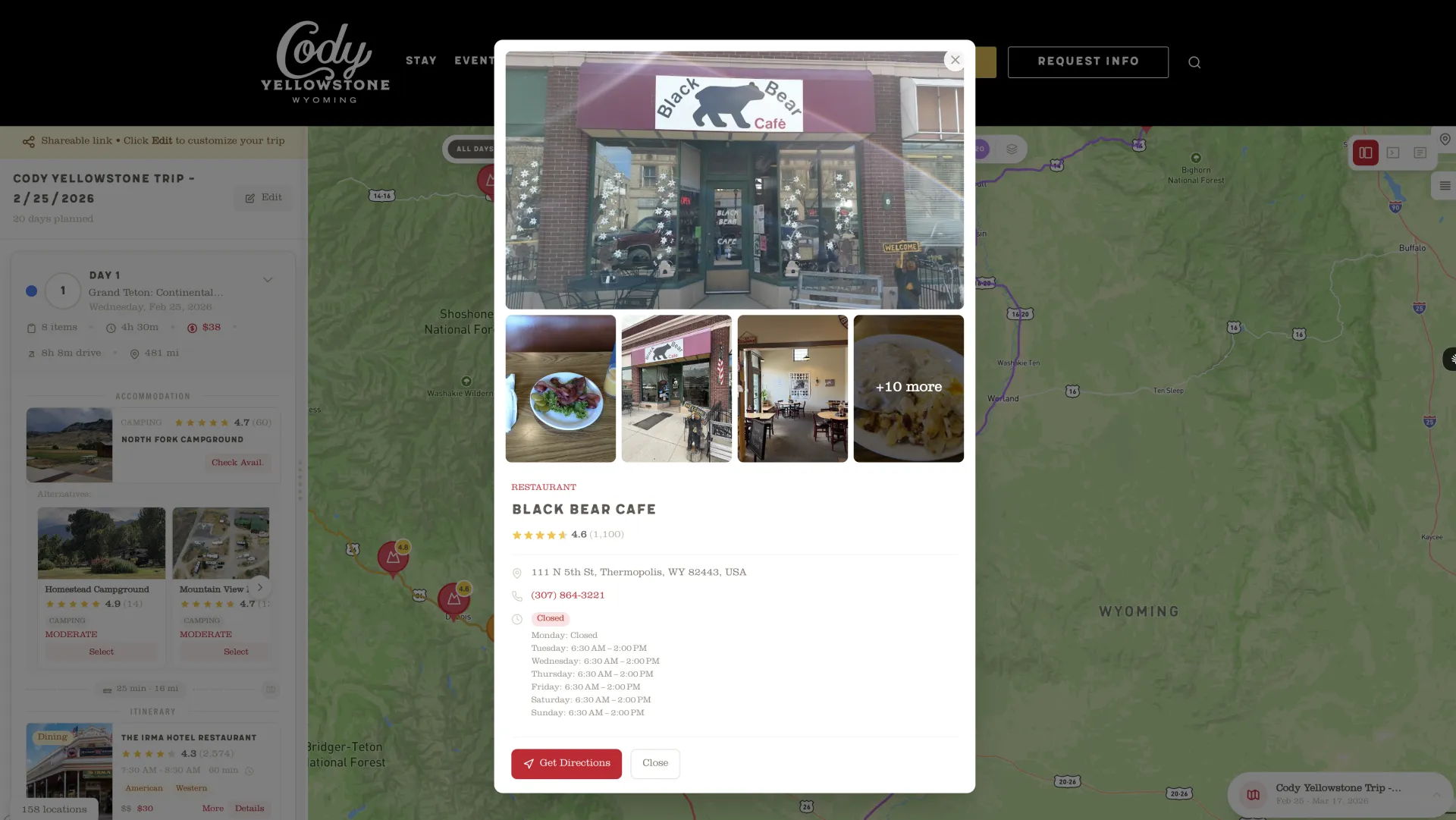
Ten screens were delivered in total: the landing page, the full seven-step quiz flow, the itinerary view with integrated map, and individual place detail pages — each fully responsive and optimized for travelers accessing the platform on mobile devices.

The Results

The platform went from specification to functional product in a single 12-hour session — well ahead of the tourism season deadline. The delivered system handled every requirement in the original brief and added polish that static guide alternatives simply cannot match.

  • 12-hour build time from specification to functional, production-ready platform
  • 10 screens delivered covering the complete user journey from landing to detailed itinerary
  • 6 integrations live on launch: OpenAI, Mapbox, weather API, PostgreSQL, image services, and analytics
  • Personalized itineraries generated in under 30 seconds after quiz completion
  • Mobile-responsive throughout — optimized for travelers planning and navigating on the go
  • Production-ready TypeScript codebase with shared type definitions across the full stack

Key Takeaways

  • For tourism organizations: AI can transform static trip guides into personalized, interactive experiences — and it does not take months to build. A well-designed quiz feeding into GPT-4 delivers recommendations that no static database ever could.
  • For AI product teams: The quality of personalization is directly tied to the quality of the preference capture. Investing in a thoughtful multi-step quiz flow is what separates genuinely useful AI recommendations from generic outputs.
  • For startup speed: Complex AI integrations — natural language generation, interactive mapping, live weather data — that would traditionally require 6 to 8 weeks of development were designed, orchestrated, and delivered in a single work session. The constraint was not capability, it was specification clarity.

READY TO BUILD YOUR PROJECT?

Get a free project audit and see how AI-orchestrated development can transform your timeline.

GET A FREE AUDIT